

When choosing paint protection film (PPF), many vehicle owners naturally focus on price, thickness, or the number of features listed on the product page. However, these specifications alone do not always tell the full story.
A high-quality PPF needs to perform well in several areas at the same time. It should maintain good optical clarity, provide useful protection against everyday surface damage, remain stable during installation, and continue to look good after prolonged exposure to sunlight and environmental contaminants.
For buyers, the more useful question is not simply “How thick is the film?” but rather “How well will this film perform in real-world use?”
Is Thicker PPF Always Better?
Film thickness is an important specification, but it should not be considered the only indicator of quality.
A thicker material may provide additional protection against certain types of physical contact, but flexibility and material construction are also important. Automotive body panels contain curves, edges, recesses, and complex contours. If a film is difficult to stretch or conform properly, installation may become more complicated.
The adhesive layer also deserves attention. A PPF needs to remain securely attached to the painted surface while allowing professional installers to position and finish the material correctly.
In practice, a balanced combination of thickness, flexibility, adhesive performance, and film construction can be more meaningful than focusing on one specification alone.
How Important Is Optical Clarity?
For clear PPF, appearance is a major part of the product experience.
The purpose of transparent film is to protect the original paint without significantly changing how the vehicle looks. Good optical clarity helps preserve the color, gloss, and visual depth of the factory finish.
This becomes particularly important on dark-colored vehicles, where imperfections, contamination, or uneven installation may be easier to notice.
Buyers should therefore consider how the film looks under different lighting conditions rather than judging it only under showroom lights. Natural daylight, direct sunlight, and indoor lighting can reveal differences in clarity and surface uniformity.
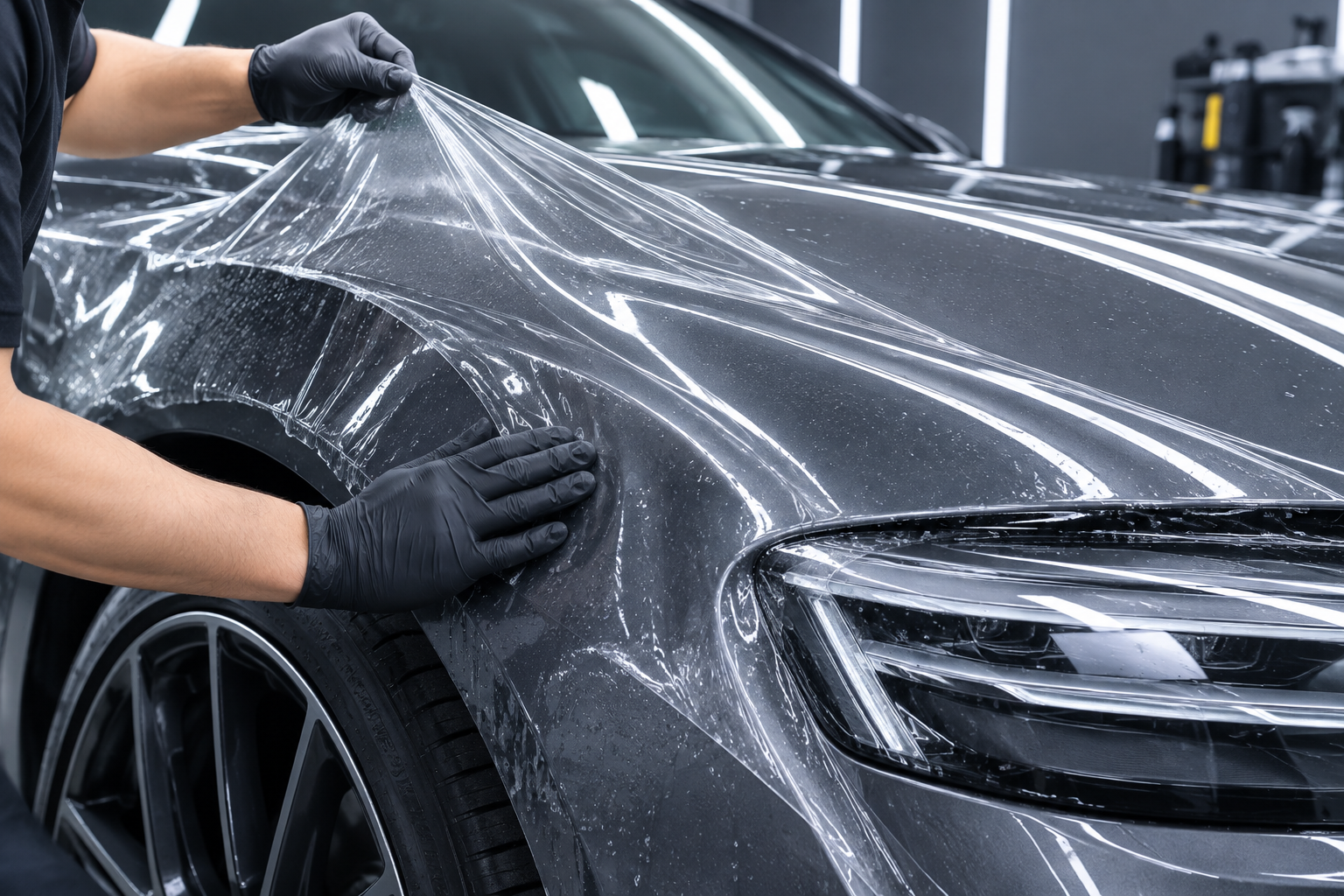
What Should You Expect From Scratch Resistance?
Scratch resistance is one of the most practical reasons for installing PPF. During everyday use, the film may encounter light contact from road particles, branches, bags, door edges, or washing tools.
A well-designed film can help reduce the effect of many minor surface scratches and scuffs, allowing the original paint to remain better protected.
However, no responsible product evaluation should describe PPF as completely scratch-proof. Deep cuts, sharp objects, strong impacts, and accidents can exceed the protective capability of the film.
Understanding this limitation is important because realistic expectations are part of choosing the right product.
Does Self-Healing Make a Difference?
Some PPF products include a self-healing surface designed to reduce the appearance of fine scratches.
The principle is relatively simple. When suitable heat is applied to the surface, the top layer can gradually return toward a smoother condition. Depending on the product and environmental temperature, sunlight may be sufficient to make certain light marks less visible.
This heat repair capability can be useful for maintaining the appearance of a vehicle that is regularly driven and washed.
It is important, however, to distinguish surface self-healing from actual damage repair. If a scratch penetrates deeply into the film, heating cannot be expected to restore the material completely.
Why Should Anti-Yellowing Performance Be Tested?
A transparent film needs to remain visually clear throughout its service life. Even if a PPF initially looks excellent, discoloration over time can affect the appearance of the vehicle underneath.
This is why anti-yellowing performance deserves attention when comparing different products.
UV exposure is one factor, but environmental pollution, chemicals, bird droppings, tree sap, and maintenance habits can also influence long-term appearance. A quality film should be formulated to resist discoloration and help delay the yellowing process under normal conditions.
Rather than relying on claims such as “never yellows,” buyers should look for credible product information and consider the conditions in which the film will actually be used.
Why Does Installation Matter So Much?
The quality of the film is only part of the final result. Installation can have an equally important influence.
Before application, the paint should be properly cleaned and prepared. Dust, grease, contamination, and existing surface defects may affect the appearance of the finished installation.
The installer also needs to manage stretching, positioning, edges, corners, and complex body contours carefully. Poor installation may result in visible edges, wrinkles, contamination beneath the film, or unnecessary stress on the material.
For this reason, evaluating the installer alongside the film itself is often a better approach than choosing a product based only on its specifications.
How Can Buyers Make a More Informed Choice?
A practical evaluation should consider several factors together: optical clarity, flexibility, adhesive quality, scratch resistance, self-healing performance, durability, and anti-yellowing properties.
It is also worth considering the vehicle's actual environment. A daily driver exposed to strong sunlight and highway debris may require different priorities from a vehicle that is mainly stored indoors.
For automotive businesses and vehicle owners exploring professional PPF solutions, Motec Paint Protection Film is one option designed around everyday paint protection, with attention to clarity, surface durability, self-healing characteristics, and long-term appearance.
Final Thoughts
A high-quality paint protection film is not defined by one impressive specification. Its real value becomes clearer when the material, installation process, driving environment, and long-term maintenance are considered together.
Good PPF should provide practical protection without compromising the appearance of the original paint. Features such as self-healing and anti-yellowing can add further value, but they should always be understood within realistic performance limits.
For buyers, the best approach is to look beyond marketing claims, examine product characteristics carefully, and choose a film and installer suited to the way the vehicle is actually used. That combination is far more important than simply choosing the thickest or most heavily advertised option.