

Buying a new car is often followed by one important question: how can the original paint be kept in good condition for as long as possible? Modern vehicles may have attractive factory finishes, but painted surfaces are exposed to many risks from the moment the car enters daily traffic. Road debris, parking lots, insects, dust, and environmental contaminants can gradually affect the appearance of the paint.
Paint protection film (PPF) offers a practical way to add a physical layer of protection without changing the original color of the vehicle. However, installing PPF is more than simply applying a transparent sheet to the body. Understanding where to install it, how to prepare the paint, and how to maintain the film can help car owners make better decisions.
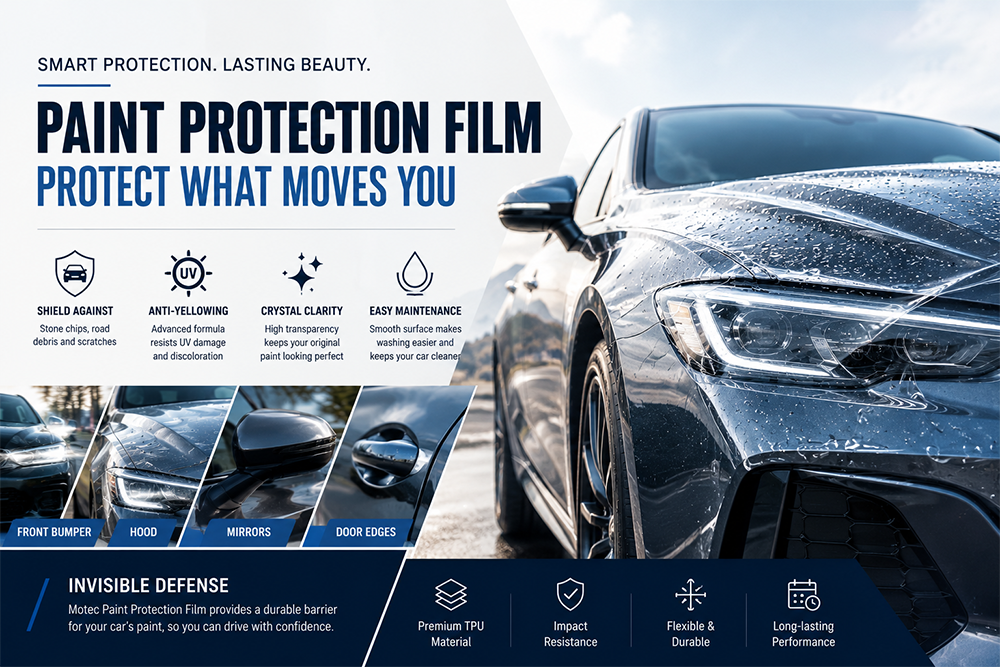
Why Install PPF on a New Car?
A new vehicle is usually the ideal starting point for paint protection because the original paint is still in relatively good condition. Applying PPF early can help reduce the chance of accumulating chips and scratches before they become noticeable.
The front end is particularly vulnerable. While driving at highway speeds, small stones and road particles can hit the bumper, hood, fenders, and mirrors. Even relatively minor impacts may leave permanent marks on exposed paint.
PPF creates a sacrificial layer over these areas. Instead of the original paint receiving the full effect of everyday contact, the film provides an additional surface designed to absorb and resist minor damage.
Which Areas Need the Most Protection?
Not every part of a vehicle experiences the same level of risk. For drivers who do not want full-body PPF, prioritizing high-impact areas can be a practical alternative.
Common areas include:
* Front bumper* Hood
* Front fenders
* Side mirrors
* Door edges
* Rocker panels
* Areas around door handles
The front bumper and leading edges of the hood generally receive significant exposure to road debris. Door edges and handle areas, meanwhile, may be more likely to develop scratches through everyday use.
A partial PPF installation can therefore provide meaningful protection while allowing vehicle owners to control the overall installation cost.
Is Paint Preparation Important?
Yes. Proper preparation is one of the most important steps in a successful PPF installation.
Before applying the film, the vehicle should be thoroughly cleaned to remove dust, grease, road film, and other contaminants. Depending on the condition of the vehicle, professional installers may also perform paint decontamination or correction.
This matters because particles trapped between the film and paint can affect the final appearance. Existing scratches, chips, or imperfections may also remain visible after installation if they are not addressed beforehand.
For a new car, this is one reason why many owners choose to install PPF relatively early rather than waiting until visible paint damage has accumulated.
Does PPF Change the Appearance of a Car?
High-quality clear PPF is designed to maintain the original appearance of the vehicle rather than cover it with an obviously visible layer. Good optical clarity allows the original paint color and finish to remain the main visual feature.
However, installation quality has a major influence on the final result. Poor alignment, excessive stretching, visible edges, trapped contamination, or improperly handled corners can make the film more noticeable.
The surface finish should also match the owner's expectations. Clear gloss PPF is a common choice for maintaining a factory-style appearance, while other finishes may be selected for a different visual effect.
How Should PPF Be Maintained?
Installing PPF does not mean the vehicle no longer needs regular care. In fact, proper maintenance can help preserve the film's appearance and performance.
Routine washing should use suitable automotive cleaning products and clean washing tools. Harsh chemicals, abrasive materials, and aggressive cleaning methods should be avoided unless they are specifically confirmed to be compatible with the film.
Contaminants such as bird droppings, insects, and tree sap should also be removed in a timely manner. Leaving these substances on the surface for extended periods may make cleaning more difficult and can negatively affect exterior materials over time.
Regular inspection is another useful habit. If a film edge begins lifting or damage becomes visible, addressing the problem early can prevent further deterioration.
What About UV Exposure and Yellowing?
Long-term outdoor exposure is an important consideration for transparent automotive films. Ultraviolet radiation, environmental pollution, chemicals, and other contaminants can gradually affect exterior materials.
For this reason, buyers should pay attention to the anti-yellowing performance of a PPF product. A well-designed film should help delay the yellowing process and maintain good optical clarity under normal conditions.
However, no film should be treated as completely unaffected by its environment. Proper cleaning, suitable maintenance products, and professional installation all contribute to long-term appearance.
How Do You Choose a Suitable PPF?
When comparing different PPF products, it is useful to look beyond price alone. Important factors can include film construction, thickness, clarity, flexibility, adhesive performance, anti-yellowing properties, surface finish, and expected durability.
Installation support also deserves attention. A well-designed product can still produce disappointing results if it is installed incorrectly.
For businesses and vehicle owners looking for a practical PPF option, Motec Paint Protection Film is one example of a product line focused on protecting automotive paint while maintaining a clean and clear appearance.
Final Thoughts
PPF can be a valuable addition to a new vehicle, particularly for owners who want to preserve the original paint rather than repair damage after it occurs. The best results come from combining a suitable film with proper preparation, professional installation, and consistent maintenance.
Instead of waiting until stone chips and scratches become visible, protecting vulnerable areas early can help keep the vehicle looking closer to its original condition for longer.
Ultimately, choosing PPF is not only about protecting a car today. It is about reducing everyday wear and helping preserve the appearance and value of the vehicle over time.