
When you invest in a high-end vehicle, the first few months are often defined by a hyper-awareness of every road pebble and rogue shopping cart. To combat this anxiety, many enthusiasts turn to Paint Protection Film (PPF). However, a recurring question lingers in showrooms and detailing forums: Does PPF scratch easily?
The short answer is both "yes" and "no," but the "how" and "why" are what truly matter for your car’s longevity.
The Paradox of Protection: Why PPF Seems to Scratch
To understand if PPF scratches easily, we must first define what a "scratch" is in the context of thermoplastic polyurethane (TPU).
On a traditional clear coat, a scratch is a permanent groove. The paint is physically removed, leaving a scar that requires compounding or polishing to fix. PPF is different. Because it is a pliable, rubber-like polymer, it is designed to absorb energy.
- Surface Marring: High-gloss films can show "swirl marks" from improper washing or contact with abrasive dust. To the naked eye, these look like scratches.
- Sacrificial Layering: The primary job of PPF is to be a sacrificial barrier. It is meant to take the hit so your paint doesn’t have to.
The Magic of Self-Healing Technology
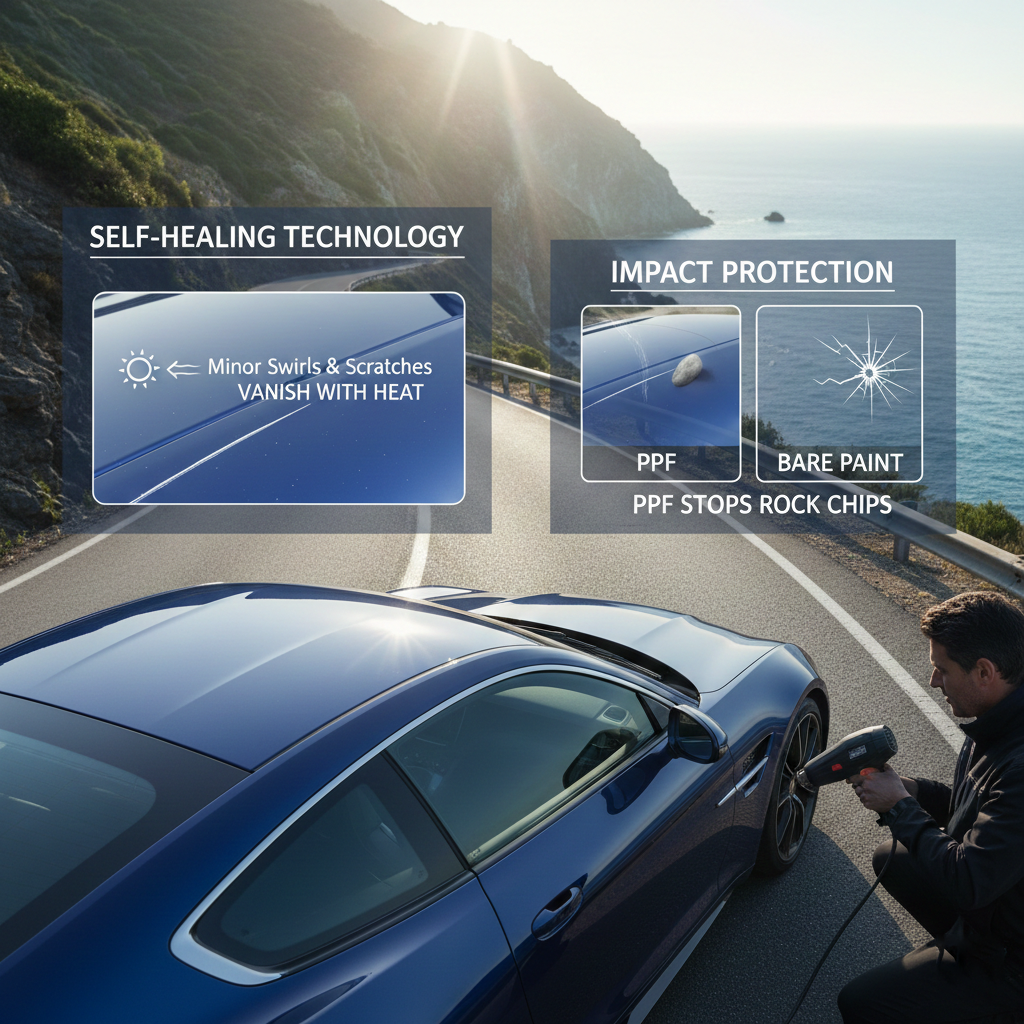
The reason experts say PPF doesn't "scratch" in the traditional sense is due to Self-Healing Technology.
Modern films, such as those engineered by Motec, feature a specialized top coat. When this layer is subjected to minor abrasions—like those from a stiff brush or road debris—the polymer chains do not break. Instead, they simply displace.
When heat is applied (via the sun, warm water, or a heat gun), these molecules return to their original, flat orientation. The "scratch" literally vanishes. This means that while the film might show temporary marks, it is remarkably difficult to permanently disfigure the surface through everyday use.
How the Healing Process Works:
- Impact: A stone or key grazes the surface.
- Deformation: The TPU layer compresses and shifts.
- Thermal Activation: Heat increases the kinetic energy of the polymers.
- Restoration: The film "remembers" its flat state and levels out.
What Actually Causes Damage to PPF?
While PPF is tough, it is not indestructible. Understanding the limits of the technology helps manage expectations.
1. High-Velocity Impacts
While PPF is excellent at stopping rock chips, a large, sharp stone traveling at highway speeds can occasionally puncture the film. In these cases, the film has done its job—it likely prevented a deep gouge in the metal or plastic substrate, even if the film itself needs a patch.
2. Sharp Objects and Vandalism
PPF is designed for road debris, not deliberate damage. A key wielded with significant pressure or a box cutter will slice through the TPU. However, the thickness of a premium 7.5mil or 8mil film provides a significant buffer that often saves the underlying paint from the worst of the intent.
3. Improper Maintenance
This is the most common "self-inflicted" cause of scratches. Using dirty microfiber towels or taking the car through a low-quality automatic brush car wash can create heavy marring. While the film may heal, consistent abuse can eventually wear down the top coat's ability to recover.
Comparing PPF to Ceramic Coatings
A common misconception is that a Ceramic Coating provides the same scratch resistance as PPF. This is a dangerous myth for your car's finish.
|
Feature |
Paint Protection Film |
Ceramic Coating |
|
Physical Barrier |
Thick (6.5-8.5mils) |
Microscopic (nanometers) |
|
Scratch Resistance |
High (Self-healing) |
Low (Chemical bonding) |
|
Impact Protection |
Stops rock chips |
Does not stop chips |
|
Longevity |
5–12 years |
2–5 years |
A ceramic coating is essentially a premium wax replacement; it makes the car easier to clean and provides a deep gloss. However, it offers almost zero protection against physical scratches or stone impacts. If your goal is to prevent scratches, PPF is the only real solution.
Why Film Quality Matters
Not all films are created equal. In the early days of the industry, many films were made of PVC. These were brittle, yellowed quickly, and scratched very easily without any hope of healing.
High-end brands like Motec focus on advanced TPU formulations. These films are engineered to remain optically clear while maintaining a high "memory" capacity for self-healing. When choosing a film, you are looking for a balance between:
- Clarity: So the paint’s metallic flake shines through.
- Elasticity: So the film can be stretched around complex bumpers without thinning out.
- Durability: Resistance to environmental yellowing from UV exposure.
Tips to Keep Your PPF Scratch-Free
To ensure your film stays looking like glass for a decade, follow these professional maintenance steps:
The Two-Bucket Method: Always wash your car using the two-bucket method to prevent dragging dirt across the film.
Avoid Pressure Washers at Close Range: While the film is tough, high pressure can lift the edges if you get too close. Stay at least 12 inches away.
Use Dedicated Sealants: Use products designed for PPF. These help maintain the integrity of the self-healing top coat.
Park in the Sun: If you notice light swirls, simply parking your car in the sun on a warm day is often enough to trigger the self-healing process.
The Verdict: Is It Worth It?
Does PPF scratch easily? No. In fact, it is the most scratch-resistant material you can apply to a vehicle. While it can be marked by heavy impacts, its ability to "heal" itself from daily wear and tear makes it a far superior choice to bare paint or coatings.
By installing a high-quality film, you aren't just protecting the color of your car; you are preserving its resale value and your own peace of mind. Instead of worrying about every hedge or highway construction zone, you can actually enjoy the drive.